When the Salt Runs Low: A Ratepayer's Test of the Winter Service Plan

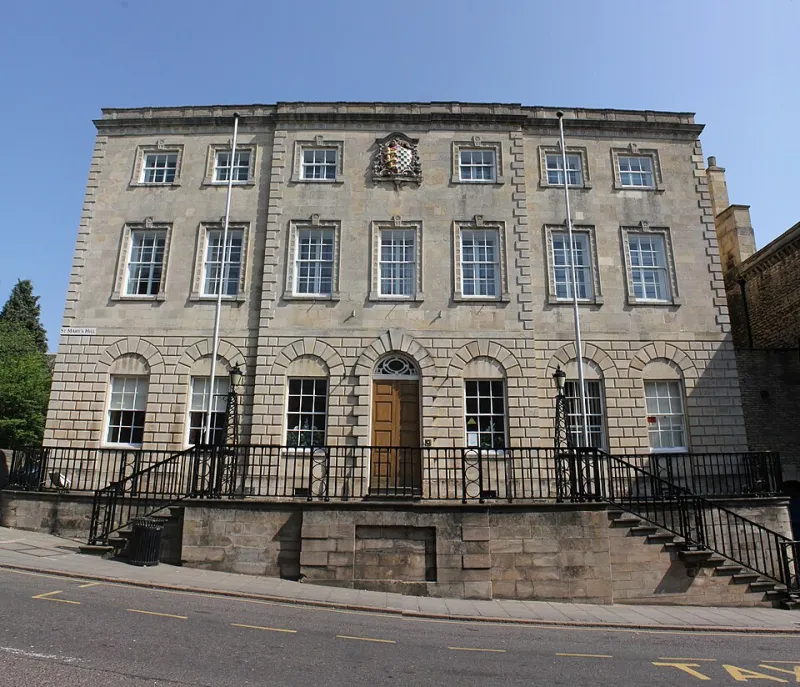
Photo: Anne Burgess, CC BY-SA 2.0, via Wikimedia Commons
On the first hard frost of the winter, every council in the country issues the same statement within the hour: gritters were deployed, priority routes were treated, and the service performed exactly as planned. Within a day, the photographs arrive — the untreated hill, the iced-over school approach, the ambulance that could not get up the hospital lane. The argument that follows is almost always about memory. It should be about paperwork.
The winter service plan is a published document. The salt stock is a number held in a barn. The treatment log is a record with times and tonnages. Each can be requested, cross-examined and turned into a case. The moment to do it is now, before the first freeze, while the plan is still a promise rather than an explanation.
A duty with a defence attached
Section 41(1A) of the Highways Act 1980 requires highway authorities to ensure, so far as is reasonably practicable, that safe passage along a highway is not endangered by snow or ice. Both halves of that sentence matter. There is a duty, and there is a reasonableness defence. What makes a council reasonable is not the confidence of its press office but the quality of its plan, the accuracy of its maps, the depth of its salt reserves and the contemporaneous record of where its vehicles actually went.
Treat the winter service plan as evidence, not as a public information leaflet.
The papers to ask for
Send one request with several parts. Ask for:
- The current winter service plan in full, along with the version it replaced, so that changes are visible.
- Route maps that name roads, not polygons, with the length in kilometres of each category.
- Salt holdings: tonnes under roof at each depot, deliveries received and scheduled, and the number of days of severe-weather treatment that stock represents.
- Grit bins: how many, where they are, and the refill schedule for each.
- The priority hierarchy and the trigger conditions — road temperature, forecast confidence, time of day — that send a gritter out.
- Treatment logs for the last three winters: date, time, route, tonnage, vehicle and any aborted runs.
- Fleet and staffing: gritters, spreaders, drivers, vacancies, agency cover, breakdowns and the contingency plan if a depot loses power.
- Which schools, hospitals, care homes and bus corridors are designated as priority, and on what evidence that list was drawn.
- Salt supply contracts, lead times and mutual-aid arrangements with neighbouring authorities.
All of this is environmental information or operational data of a routine kind. Expect it to be disclosed, and diary the twenty-working-day deadline.
Test one: does the map name the roads?
Many plans now describe a “strategic network” rather than listing streets, which makes the document impossible to check from a kitchen table. Push back. Ask for the road names behind the map, then take the council's own list of schools and hospitals and see whether the approaches are on it. If a school with 400 pupils sits at the bottom of an unclassified hill, is that hill treated first, second or never? The answer should be written down somewhere. If it is not, that is the finding.
Test two: is the salt real?
The 2010 salt crisis, when reserves ran to a few days and councils rationed grit, produced a national review that urged authorities to plan for sustained cold rather than a single sharp snap. Ask what assumption your council now uses — five days, six, seven — and whether that figure has ever been tested against a real fortnight of sub-zero nights. Then ask how much of the stated stock is under roof and how much is merely under contract with a supplier who is also supplying twelve other authorities. A purchase order is not a pile of salt.
Test three: who was quietly dropped?
Route networks shrink by design, not by accident. Compare this year's plan with the one from five years ago and count the kilometres removed. Then look at what sits on them: rural lanes used by care workers, dialysis routes, the roads that carry the school bus. Cuts of this kind engage the public sector equality duty, because they fall hardest on disabled and older residents who cannot drive around the problem. Ask whether an equality impact assessment was done for any reduction in the treated network. In most places, the honest answer will be no.
Test four: what happens when it runs out?
Every plan should say, in writing, what happens when stock falls below the trigger level: which routes are dropped first, who authorises the withdrawal, and how residents are told. Ask for the escalation procedure and for the last occasion it was used. If the council has never rehearsed running out, your next question is why the plan exists at all.
Build the cold-week diary
When the freeze comes, keep a record. Photograph untreated roads with a timestamp and a location pin. Log school closures, cancelled bus services, missed home-care visits and ambulance delays reported locally. Ask each time whether the road in question appears on the published route. A single week of disciplined recording is worth more to a scrutiny committee than a hundred angry posts.
Take it to scrutiny
Most councils have an environment or place scrutiny committee that meets before Christmas. Submit a written public question with three or four of your findings attached. Ask the cabinet member to confirm the salt figure, the number of routes dropped and whether the equality assessment exists. Ask for the answers to be published with the minutes, not read aloud and forgotten.
Then set a date — say, the first Monday after a bad week — to publish what you found. The council has already told you its version. Yours should be on the record before the thaw.