The Top-Up Nobody Mentions: What a Council Pays for a Bed, and Who Makes Up the Difference
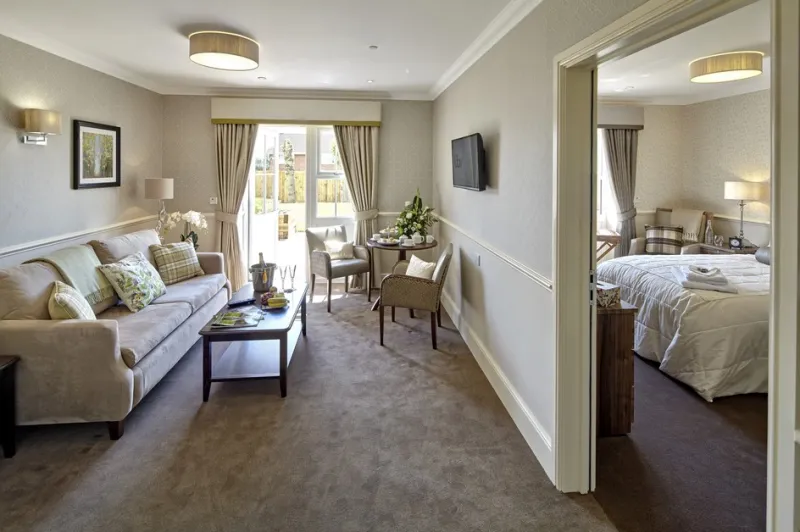
Photo: Avery Healthcare, CC BY-SA 4.0, via Wikimedia Commons
The letter arrives from the care home, not from the council. It is polite. It explains that the fees no longer cover the cost of the room, and that a third-party top-up of a certain number of pounds a week will be required from next month. There is a form. There is a deadline. There is no mention of what the council is paying, because the council's rate never appears on the letter.
This is how the most consequential number in adult social care stays invisible. A council sets a fee rate for residential and nursing placements. A provider sets its actual cost. Where the first is lower than the second, somebody has to bridge the gap — and in England, increasingly, that somebody is a daughter with a debit card.
The duty, and the hole in the middle
Under the Care Act 2014, a council that has assessed someone as having eligible needs must meet them. The commissioning chapter of the statutory guidance is explicit that authorities must have regard to the actual cost of providing care and must not use their purchasing power to drive fees to a level that is unsustainable. That is not sentiment. It is the condition on which a functioning market depends.
Top-ups are lawful. What is not lawful is presenting a top-up as a choice when no genuinely affordable alternative was ever offered, or allowing a home to ask families for money before the council has confirmed that cheaper suitable provision does not exist. Yet the line between a legitimate top-up and a private tax on the frail is drawn entirely in private correspondence, and almost never in public data.
The cross-subsidy we have chosen not to see
The Competition and Markets Authority's market study of care homes in 2017 found that people paying for their own care were charged substantially more than council-funded residents — a gap estimated in some analyses at around 40 per cent. That premium has been treated for years as a quirk of the market. It is better understood as a subsidy: self-funders and their families have been quietly covering the shortfall in the rate that councils pay.
That arrangement is now failing at both ends. Self-funders are running out of money and turning to the council, which then pays the lower rate. Providers facing wage bills, energy costs and buildings that need roofs cannot absorb the difference indefinitely. Homes close, residents are moved, and the cost of the move lands on the NHS in the form of delayed discharge.
The 2022–23 fair cost of care exercise was meant to make this visible. In many areas it did — councils published a cost of care figure and then set fee rates below it. Some authorities never published the exercise at all, or published a summary without the underlying data. A council that knows the gap and does not disclose it has made a political choice. It should be required to defend that choice in public.
What transparency would actually look like
Five things, all cheap, all publishable before the next budget:
- The full fee schedule — residential, nursing, dementia, and any enhanced rates — set against the authority's own cost of care benchmark.
- The number of third-party top-up agreements in force, the number arranged by the council itself, and the range of weekly amounts, anonymised.
- How many providers declined a council-funded placement in the last twelve months, and at what rate they declined.
- The number of beds in the local market, the number of homes rated inadequate or requiring improvement, and every closure or deregistration in the past three years.
- The number of people waiting for a placement and the days lost to delayed discharge in the local area, published monthly.
None of this requires new legislation. Every item is data the council already holds, or can obtain from a provider it commissions. Publication would not close the gap, but it would end the fiction that there is no gap to close.
Ask before the February vote
The council tax decision in February 2027 will be taken on a set of assumptions about what care costs and who pays for it. If the fee rate is below cost, the budget is balanced by an invisible transfer from families and from the staff wages that providers hold down to survive. That is not efficiency. It is a decision taken in the dark.
It is also a decision within reach of anyone reading this. Ask your council, in public, at the budget meeting, for its fee rate, its cost of care benchmark and its top-up count, side by side. Ask the cabinet member to say out loud which of the three is doing the work.
And keep asking when the answer is a paragraph of warm words about a sustainable market. The number is either on the page or it is being paid elsewhere.