Opening the Black Box: How to Audit Your Council’s Reserves Before the 2026/27 Budget Vote

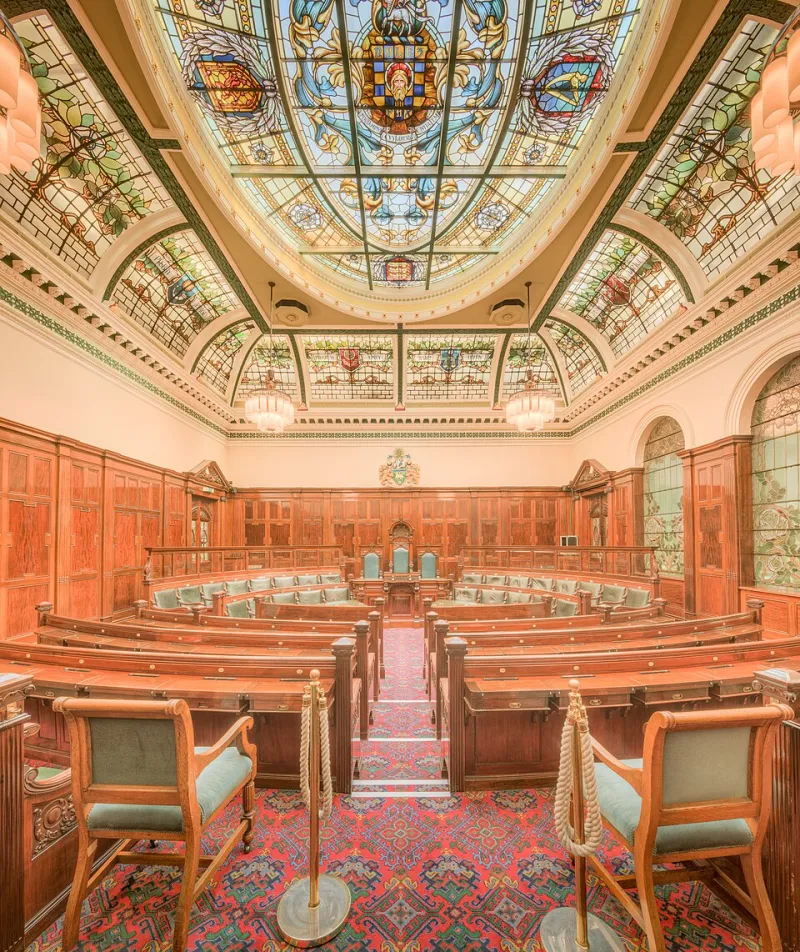
Photo: European Parliament from EU, CC BY 2.0, via Wikimedia Commons
When a council says it has reserves, it is not making a single factual statement. It is making a claim about capacity, risk and choices. The £3 billion question facing ratepayers in 2026/27 is not simply how much money sits in the bank. It is how much of that money is genuinely available, how much is already promised, and how much is being used to avoid a difficult conversation about cuts.
Budget papers are arriving in council cabinets and scrutiny committees now. Before the full council sets council tax, readers need to open the statement of accounts and read the fine print. Reserves are where financial strategy meets political choice. They are also where the fog is thickest.
Start with the audited accounts, not the press release
Find three documents on your council’s website: the statement of accounts for the last completed financial year, the budget report for 2026/27, and the medium-term financial strategy. Search the finance section, then the cabinet papers. If the documents are hard to find, note that. A council that buries its accounts is already telling you something.
The statement of accounts distinguishes between usable and unusable reserves. Unusable reserves are accounting entries, not spending money. They include things like the pensions reserve and capital grants unapplied. They cannot be raided to keep libraries open. The useful figure is the General Fund balance, sometimes called unallocated reserves, and the separate total for earmarked reserves.
Separate the pots
Unallocated reserves are the council’s general cushion. They absorb risk: demand pressures in adult social care, inflation, failed commercial investments, emergency spending. Ask what minimum level the council has set and which risk assessment supports it. A healthy unallocated balance is not a sin. It is a safeguard. The question is whether it is being protected while services are cut.
Earmarked reserves are set aside for specific purposes. Some are genuine commitments: insurance, PFI obligations, ring-fenced grants. Others are softer. ‘Budget smoothing’ reserves may be used to flatter a single year. ‘Invest to save’ pots may never deliver. Ask for the purpose, the balance and the conditions for release for every earmarked reserve above £1 million.
Capital receipts are proceeds from selling assets. They are not general revenue. Using them to plug a revenue gap usually requires a capitalisation direction or specific flexibility. Ask whether asset sales are being used to pay for day-to-day services, and what will be left to sell next year.
Then there is the accounting fog. Provisions are liabilities, not cash. Accruals are timing adjustments. Minimum revenue provision is a statutory charge. Council-owned companies can conceal risk in subsidiary accounts. None of this is necessarily improper. But a budget paper that quotes a single reserves total without disaggregating these categories is not giving the public a meaningful answer.
Compare reserves with cuts
If a council proposes to cut services while holding unallocated reserves above its own minimum, ask why. There may be a defensible answer: soaring demand, inflation, a cliff-edge funding settlement, or a risk that reserves are needed for a forthcoming liability. But the public deserves to hear that answer before the vote, not after the cuts are implemented.
Look for reserve-based budgeting. If the budget repeatedly relies on one-off reserve drawdowns to balance the base budget, the council is buying time, not solving a problem. Compare the planned drawdown with the planned cuts. Ask which services are being reduced and which reserves are being protected. Ask whether the Section 151 officer has issued any warning about financial resilience.
Questions for full council
Most councils have a public question time at full council. Read the rules, submit questions in writing by the deadline, and ask for written answers that can be published. Good questions are specific and answerable.
Ask: What is the unallocated General Fund balance at 31 March 2026 and the projected balance at 31 March 2027? What is the council’s minimum reserve level, who set it, and what risk assessment supports it? How much of the 2026/27 budget relies on one-off reserves, and which services would be affected if that funding were removed? Which earmarked reserves exceed £1 million, and what are the conditions for their release? Have capital receipts been used to support revenue spending, and under what direction? What is the Section 151 officer’s assessment of the council’s financial resilience, and will it be published in full? If reserves are described as healthy, why are these cuts being proposed now?
Do not accept ‘it’s complicated’ as an answer. Complexity is a reason to explain, not a reason to conceal.
Turn the budget paper into a campaign
Build a simple table: reserve category, balance, intended use, and whether it is genuinely available. Share it with tenant groups, trade unions, climate campaigners and local charities. Ask your scrutiny committee to call the Section 151 officer and the cabinet member for finance. Use freedom of information requests to track reserve movements between years. Compare your council with neighbouring authorities, not to score points but to expose outliers.
Demand a plain-English reserve statement published alongside the budget, with a clear breakdown of unallocated reserves, earmarked reserves and capital receipts. Demand that the Section 151 officer’s risk assessment is public before the council tax vote. And demand that any decision to cut services while protecting reserves is explicitly justified, not hidden in an appendix.
A budget is a moral document. Reserves are part of that document. Read them, question them, and organise before the vote.