Ninety Minutes in the Town Hall: A Reader's Guide to Auditing Your Council's Climate Claims
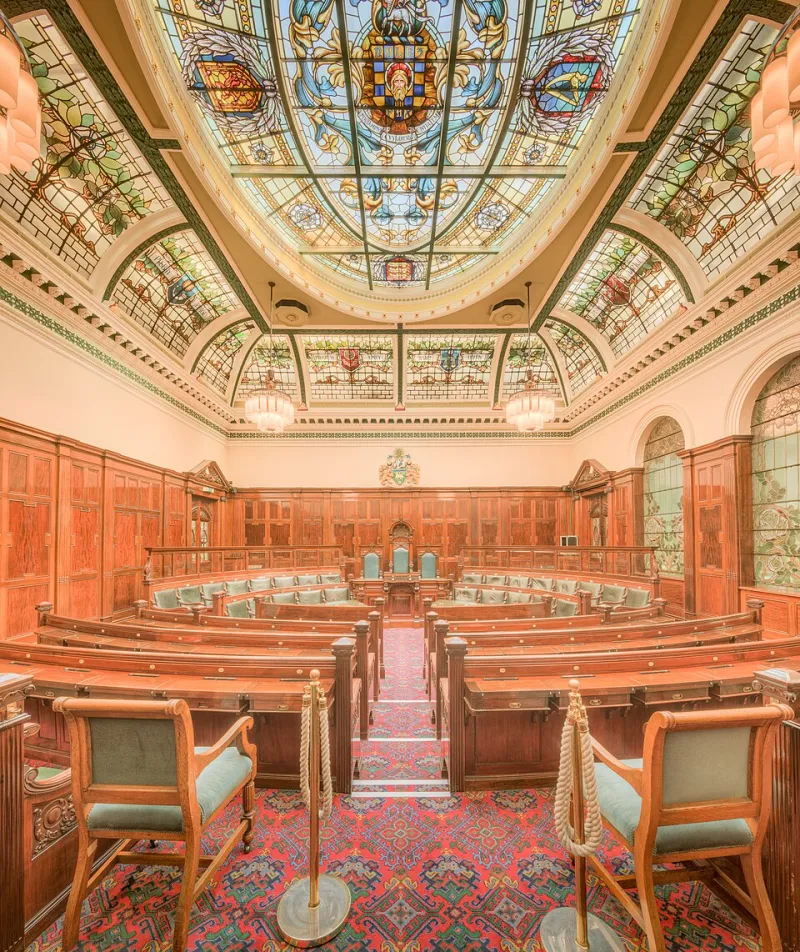
Photo: Michael D Beckwith, CC0, via Wikimedia Commons
Councils are not required to make this easy. Climate strategies sit behind three clicks, progress reports are buried in committee packs running to four hundred pages, and the numbers that matter — how much was budgeted, how much was spent, how many homes were actually treated — are frequently absent altogether.
But the material is nearly always there. You do not need to be a carbon accountant to read it. You need ninety minutes, a laptop, a document to paste into, and the discipline to write down the date and time of everything you find. Here is how.
Before you begin
Open three things: your council's main website, its committee management system (often a Modern.gov or CMIS portal, usually under a 'councillors and democracy' link), and its freedom of information page. Start a blank document. Note the council's stated net zero target date and the baseline year it is measured against. Those two figures frame everything that follows.
Minutes 0–15: Find the plan, and check its date
Search the site for the climate action plan, climate emergency strategy or net zero roadmap. Do not read it yet. Check four things first: when it was published, when it was last reviewed, which committee owns it, and whether progress is reported on a fixed cycle.
Red flags at this stage: a target year with no interim milestones; a baseline year that has been revised forward; a plan last reviewed before 2024; and no named officer or portfolio holder with responsibility for delivery. A strategy that nobody owns is a strategy that nobody is failing to deliver.
Minutes 15–35: Follow the money
This is the step most people skip and the one that tells you most. Open the budget book or medium-term financial strategy, usually published with the cabinet papers in February or March. Search for the words climate, carbon, retrofit, active travel, biodiversity and sustainability.
Ask: is there a distinct climate budget line, or are the figures scattered across directorates so that no one can total them? Is the money capital or revenue? Capital builds things; revenue pays for the staff who run them. Compare the 2026–27 figures with 2025–26. Did the allocation rise or fall? Then look at the capital programme for the next three years and note which environmental schemes have been pushed into the final year — a common way of announcing a project while never funding it.
Minutes 35–55: Interrogate the planning record
Go to the planning committee agendas for the past twelve months. You are not reading every report. Sample ten major applications and record: what officers recommended, what councillors decided, whether a carbon or energy statement was submitted, and whether any elected member asked a question about emissions.
The pattern is usually visible within an hour. Then check two supporting documents: the Local Plan timetable (is it on schedule, and has the sustainability appraisal been updated) and the council's planning application portal, filtered to major schemes with environmental statements. If your authority has a design guide or a net zero buildings policy, verify whether it is applied as policy or cited as aspiration.
Minutes 55–70: Check the scrutiny trail
Find out whether there is a climate scrutiny committee or a climate portfolio holder with a public question session, how often it meets, and whether officers attend with data. Read one recent progress report and count how many of the commitments in the action plan are reported with a number against them. Anything described only as 'ongoing' or 'in progress' is not being measured.
Also look at the annual governance statement and the corporate risk register. If climate change does not appear as a risk to the authority's statutory duties, that absence is itself a finding worth reporting.
Minutes 70–90: Ask in writing
Anything you have not found should become a formal request. Environmental information is generally covered by the Environmental Information Regulations 2004, which carry a twenty-working-day deadline and a presumption in favour of disclosure. Use them rather than the Freedom of Information Act where the subject is environmental.
Dear Information Governance Team,
Under the Environmental Information Regulations 2004, please provide the following: (1) the council's current climate action plan and any progress report produced since January 2025; (2) the budget allocated and actually spent on domestic retrofit in 2025–26 and 2026–27, with the number of households treated; (3) for each planning committee meeting since 1 November 2025, the list of major applications determined and whether a carbon or energy assessment was submitted; (4) any internal audit, risk register entry or officer assessment referring to the delivery risk of the council's net zero target; (5) the council's latest scope 1, 2 and 3 emissions figures and the methodology used.
If any element is held but withheld, please cite the specific exception relied upon.
Keep a copy, diarise the deadline, and if the response is late or evasive, ask for an internal review. Councils do answer these. It is remarkable how often the answer is more candid than the public report.
What greenwash looks like in a council document
- A target with no delivery plan, no budget and no named owner.
- Reductions attributed to the decarbonisation of the national grid rather than to anything the council did.
- Offsets, purchased credits or tree-planting pledges counted as emissions savings.
- 'Aspirational' and 'subject to funding' used where a commitment was promised.
- Progress reported against a baseline year that has been moved.
- Annual reporting that slips by a year, then merges two years into one.
None of these is necessarily dishonest. Together, they are how a plan becomes a press release.
Take it to full council
Most councils allow public questions at full council meetings, typically with three to seven days' notice and a word limit set out in the constitution. Check the rules, then send this to the monitoring officer or democratic services:
I wish to ask a public question under the council's constitution at the next full council meeting. Given the council's declared climate target, will the Leader confirm: (a) the total budget allocated and spent on climate measures in 2026–27; (b) how many homes were retrofitted in 2025–26 against target; (c) how many major planning applications determined in the last twelve months included a quantified carbon assessment; and (d) whether the council will publish quarterly emissions and delivery data rather than an annual summary? If the council cannot answer (b) or (c), will it commit to collecting that data from the next quarter?
Ask it in the room. Ask it on the record. Then send the answer, and your audit notes, to your ward councillors, your MP and your local paper — and to us.
The purpose is not to catch people out. It is to make the record legible, so that the gap between what is promised and what is funded becomes a political fact rather than a footnote in a four-hundred-page committee pack.