Concrete, Asbestos, Boiler: A Parents’ Ledger for the School Estate
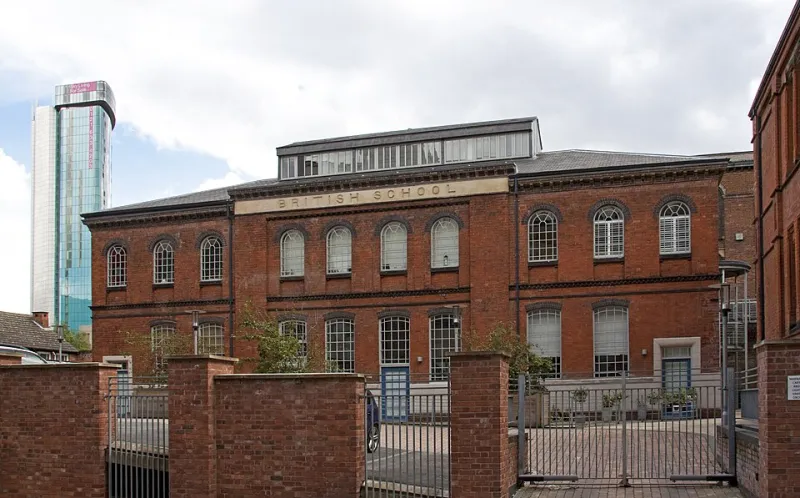
Photo: Tony Hisgett from Birmingham, UK, CC BY 2.0, via Wikimedia Commons
Parents receive plenty of notices in late November: the nativity costume, the inset day, the overdue library book. They rarely receive the one document that matters most to the building their children sit in: an honest account of its condition. As of 27 November 2026, the school estate remains one of the clearest tests of whether councils and academy trusts are protecting the services they claim to defend. A repair backlog is not an abstract capital figure. It is a boiler that fails in January, an asbestos register nobody has read, a ceiling tile propped open with a warning sign.
This is a practical audit for parents, governors and local campaigners. It does not require engineering expertise. It requires persistence, a spreadsheet and a refusal to accept that the condition of a classroom is somebody else’s problem.
Begin with the three registers
Every school should have an asbestos management survey and register. Ask the responsible body for the date of the last survey, the register itself, and the management plan that sets out how asbestos is being managed. For a local authority maintained school, that means the council. For an academy, it means the trust. Governors and trustees have a right to see this material; parents can request a summary and should not be fobbed off with a generic assurance.
RAAC is the second register. Reinforced autoclaved aerated concrete is not a theoretical risk. Ask whether the school has been surveyed, when, by whom, what the outcome was, and what remediation or interim measures are in place. If a survey has not been done, ask why. The Department for Education holds condition data; request the school-level summary and compare it with what the responsible body tells you.
The third is the boiler and mechanical record. Ask for boiler replacement dates, maintenance logs, emergency repair call-outs and any temporary heating arrangements. A school that has relied on temporary heaters for three winters is not a school with a minor maintenance issue. It is a school with a capital failure that has been normalised.
Follow the capital money
Repair backlogs persist because money moves elsewhere or never arrives. Request the capital programme for the current financial year and the previous three years. For maintained schools, ask how much School Condition Allocation was received and how it was spent. For academies, ask the trust the same question about its condition funding. Ask about Devolved Formula Capital, even where it is modest, because small sums reveal priorities.
Then ask the uncomfortable question: what capital receipts has the council or trust received from the sale of school land or buildings? Has any of that money been recycled into the school estate? Capital receipts are not automatically ring-fenced for repairs, but the public is entitled to know whether assets sold from the education estate have left the classroom behind. Compare receipts with the backlog. Publish the gap.
Build the school-by-school ledger
A single spreadsheet is enough. For each school, record the responsible body, the date of the RAAC survey, the asbestos survey date, boiler age and failure history, the estimated cost of outstanding repairs, capital spend over the last three years, and any capital receipts from land or building disposals. Add a column for evidence: the document reference, the date received and the officer or trust response.
Do not turn this into a beauty parade of buildings. Turn it into an evidence ledger. A red, amber and green rating is useful only if it is tied to documents. A school rated red because it has no current asbestos survey is a different problem from a school rated red because its boiler is beyond economic repair. The ledger should make that distinction visible.
Use FOI and governor rights
Freedom of Information requests should go to the council and, separately, to each academy trust. Ask for the condition data, the maintenance backlog, the capital programme and the receipts. Use the Environmental Information Regulations where the material concerns the state of the premises and environmental risks such as asbestos. Do not ask for everything at once; ask in tranches and keep a log.
Governors can request the same material through the headteacher and the trust board. Ask for it as a formal agenda item. Ask for the school’s maintenance plan and its five-year capital forecast. If the answer is that no such forecast exists, that is itself a finding. Publish it.
Questions for the spring term
Before the spring term begins, put these questions to the cabinet member for education, the director of children’s services and the trust board. Which schools have not had a RAAC survey? Which have asbestos management plans that are overdue for review? How many boiler failures have occurred in the last two winters? What is the total backlog, and how much of it is classified as urgent? How much capital receipt has been taken out of the school estate, and where did it go?
The classroom is crumbling not because parents have failed to ask, but because the system has learned to answer with reassurance rather than records. We Say Enough when a repair backlog is allowed to hide behind a term-time newsletter. Build the ledger, publish it and make the next budget vote answer to the buildings children actually use.