Gullies, Gates and Gaps: The Winter Flood Audit Your Council Has Not Published
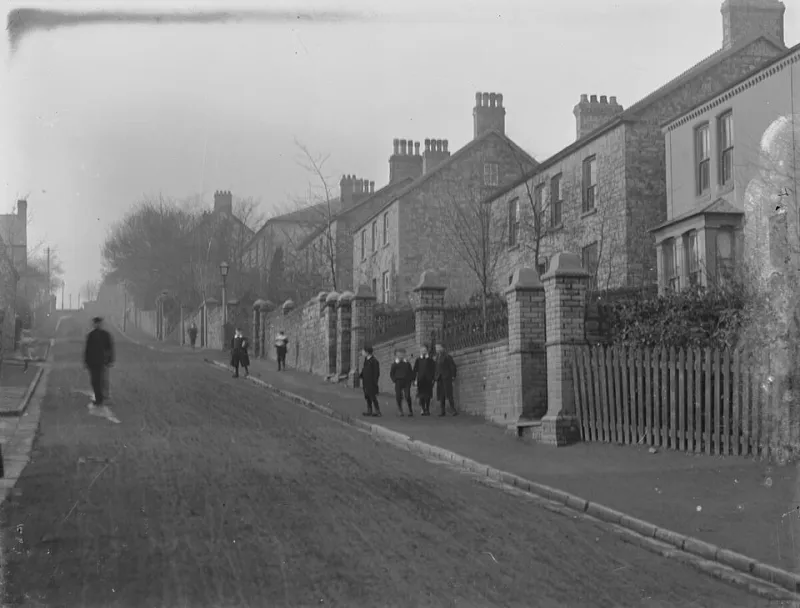
Photo: Unknown, Public domain, via Wikimedia Commons
Winter flooding rarely begins with a river bursting its banks. More often it begins with a gully full of leaves, a culvert half-blocked by silt, or a flood gate that has not been opened since the last inspection. On 17 November 2026, as the first sustained rains of the season settle in, ratepayers are entitled to ask a simple question: where is the evidence that the council has done what it says it has done?
A maintenance log is a public promise
Highways departments are good at reassurance. They issue autumn statements about gully cleansing, culvert inspections and winter readiness. What they rarely publish is the schedule behind the statement: which streets were cleared, when, by whom, and how many gullies were missed. That is not a technical detail. It is the difference between a flood prevention service and a public relations exercise.
A gully that has not been emptied is a small failure that becomes a large one when surface water cannot drain. A culvert that has not been inspected is an invisible risk. A flood gate that has not been tested is a promise with no proof. Campaigners should treat the maintenance log as they would a budget line: something that must be opened, checked and challenged.
What to request, and how to frame it
Start with a Freedom of Information request to the highways department, copied to the cabinet member with responsibility for highways and flood risk. Ask for data, not PDFs. A spreadsheet can be sorted, mapped and checked. A scanned table can be buried. Request the following for the 2026/27 municipal year to date:
- The full gully cleansing schedule by street and ward, including the planned date and the actual completion date.
- The total number of gullies on the council's asset register, and the number cleared at least once since 1 April 2026.
- The number of gullies recorded as blocked, damaged or inaccessible, with the location and the date the defect was reported.
- Culvert inspection records, including the date, outcome and any remedial work ordered.
- Flood gate and pumping station checks, including who carried out the check and what was found.
- Records of surface water incidents reported to the council since January 2024, with street-level locations where possible.
- The contract or service level agreement with any private cleansing contractor, including performance penalties and completion reporting.
Ask the council to define its terms. What counts as a completed cleanse? Does a partial cleanse count? How long is a gully allowed to remain on the defect list? If the council cannot answer those questions, that is itself a finding.
Build the drain deficit
Once the data arrives, map it against two other public sources: the Environment Agency's flood risk zones and the council's own records of surface water incidents. The aim is not a national picture. It is a street-level ledger of vulnerability.
Create a table with these columns: street, ward, flood risk zone, gullies scheduled, gullies cleared, overdue cleanses, recorded incidents since January 2024, and a simple risk score. Score one point for every scheduled gully not cleared, one point for every recorded surface water incident, and two points for any street in a high-risk flood zone with overdue cleanses. The result is a drain deficit: a list of places where the council's maintenance promise and the physical record do not match.
Publish it. A spreadsheet on a campaign website is more powerful than a press release because residents can find their own street. Add a short note on methodology and a clear invitation for the council to correct any errors. If the council says the data is incomplete, ask why a public body does not know the state of its own drainage assets.
Put it in front of the cabinet member
Data alone does not move a council. A deadline does. Send the drain deficit to the cabinet member for highways, the director of place or environment, and the relevant scrutiny chair. Ask for a written public response by 5pm on 11 December 2026. Use this template.
Dear Councillor [Name],
I am writing as a resident of [ward] and as part of [group] to ask for a public statement on the council's 2026/27 gully and culvert maintenance programme. On 17 November 2026 I submitted a Freedom of Information request (reference [insert]) seeking street-level completion data, defect records and surface water incident reports.
Using the council's own data and the Environment Agency's flood risk maps, we have identified [number] streets where scheduled cleansing is overdue and [number] streets where recorded surface water incidents coincide with incomplete maintenance. I attach the summary table.
Please provide a written response by 5pm on 11 December 2026 setting out: first, why each overdue cleanse has not been completed; second, what remedial action is scheduled and by what date; third, whether the council will publish its gully and culvert maintenance schedule in an open, street-level format before the next winter season; and fourth, who is accountable for the completion rate.
If the council cannot provide this information, please state which parts are unavailable and why. I intend to publish your response alongside the data so residents can judge the record for themselves.
Yours sincerely,
[Name]
Publish before the red warning
The next red warning will not wait for a committee cycle. The council's drainage record should be public before the water arrives, not after the clean-up. If your council cannot produce a street-level maintenance log, ask why. If it can, publish it. A drain is a small piece of public infrastructure, but the deficit it represents is a question of accountability. We Say Enough when the reassurance stops and the evidence starts.