The Silence in the Lobby: Reading Your Council’s Influence Register as a Planning Document
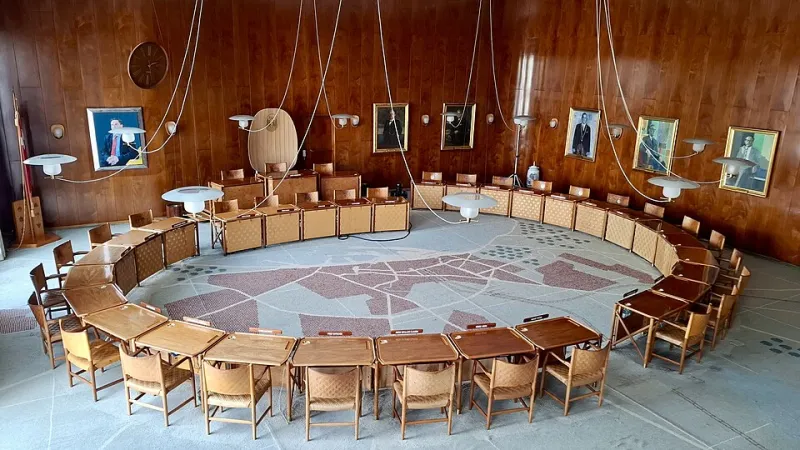
Photo: Ciara Ní Riain, CC BY-SA 4.0, via Wikimedia Commons
Influence rarely announces itself. It arrives as a ‘pre-application discussion’, a ‘technical note’, a ‘stakeholder engagement event’, or a quiet coffee with a cabinet member. A lobbying register is supposed to catch that influence and place it on the public record before a decision is made. In too many councils, it catches almost nothing.
There is no universal statutory duty on English councils to publish a lobbying register. Some do so voluntarily. Some publish a register of councillors’ interests and call it transparency. Some publish nothing at all. That patchwork is not a neutral quirk of local government. It is a democratic failure, and it matters most where public money and private interest meet: planning committees and procurement boards.
What a useful register would tell you
A serious register would record who met whom, when, and about what. It would name the lobbyist, the organisation, the council officer or elected member, the subject, and any relevant decision. It would include consultant lobbyists, developers, contractors and their intermediaries. It would be updated monthly, published in a searchable format, and linked to the decision it sought to influence. Gifts and hospitality would sit alongside it, not in a separate document that nobody checks.
Most registers fall far short. They list a handful of meetings, often months after the event. They omit pre-application planning discussions, which are precisely where schemes are shaped. They record ‘internal’ meetings that exclude external lobbyists. They fail to name the consultant who arranged the meeting. They are buried in a committee services page under a heading that no ordinary resident would think to search.
Why the gaps matter
A gap is not proof of wrongdoing. It is an absence of evidence where evidence should exist. That distinction matters, but it does not make the absence harmless. If a developer meets planning officers repeatedly before submitting an application, and none of those meetings appear on a register, the public cannot see how the scheme was shaped. If a bidder meets the procurement team before a contract is awarded, and the register is silent, the process looks less like competition and more like choreography.
Transparency is not a luxury add-on to planning and procurement. It is the infrastructure of consent. When influence is invisible, trust collapses. When trust collapses, every decision looks rigged, even when it is not. A good register protects honest officers and members as much as it informs the public.
A step-by-step method
First, find the register. Search your council’s website for ‘lobbying register’, ‘register of meetings’, ‘hospitality register’ and ‘access to information’. Check committee services and the monitoring officer’s pages. If there is no register, submit a freedom of information request asking for all meetings between named developers or contractors and senior officers or cabinet members over the past two years.
Second, check the date. When was the register last updated? If it is more than three months old, note that. A register that is published annually is not a register; it is an archive.
Third, build a spreadsheet. Columns should include date, lobbyist, organisation, issue, council attendees, and any related decision. Do not rely on the council’s formatting. Extract the data and make it comparable.
Fourth, cross-reference. Search the planning portal for applications from the organisations named in the register. Check committee reports for pre-application discussions. Look at the contract register for awards to the same companies. Read cabinet reports, forward plans and officer decision notices. Match dates and names. Look for patterns: the same developer meeting the same officers before each committee; bidder meetings before a contract award; ‘pre-decision’ discussions that appear nowhere else.
Fifth, use freedom of information. Ask for officers’ diaries, meeting notes and emails relating to specific applications or procurements. Some material will be exempt, but the pattern of what is released and what is withheld is itself informative.
Sixth, ask at full council. Submit a public question demanding that the register is updated before the next planning or procurement decision, not after it. Ask for the register to include pre-application meetings and consultant lobbyists. Ask who is responsible for compliance and what sanctions exist for non-publication.
Seventh, publish your findings. A local spreadsheet, a short briefing, a map of meetings, a timeline of influence. Share it with residents’ groups, planning objectors, trade unions and local journalists. Transparency campaigns succeed when they make the invisible visible in a form that people can use.
Demand a standard, not a favour
Councils can fix this now. They do not need to wait for Westminster. A meaningful standard would require pre-decision publication, a monthly update, machine-readable data, coverage of officers as well as members, inclusion of consultant lobbyists, and a clear link between each entry and the decision it sought to influence. It would require an independent monitoring function and real consequences for non-compliance.
Until then, the silence in the lobby is a political choice. If your council’s register is empty, late or impossible to find, ask what that silence is protecting. Then ask who benefits from it. The answer is usually found in a planning application or a contract award, and it is usually worth the search.