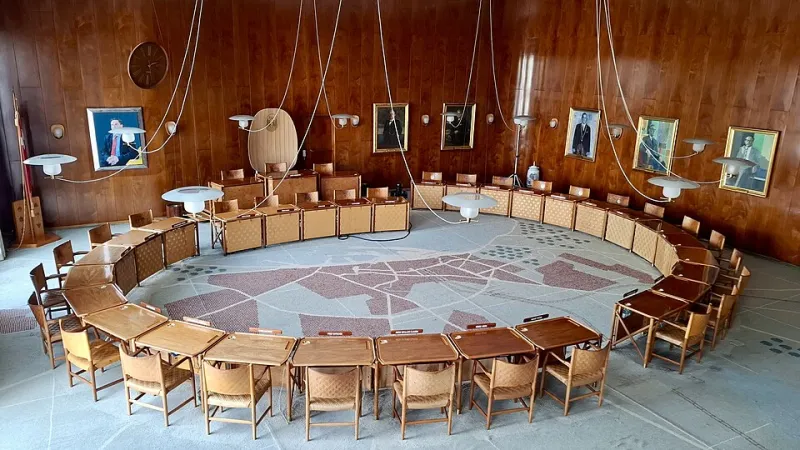
Antalya Is the Photo Opportunity. Your Planning Committee Is the Test.
As delegations gather in Antalya for COP31, the UK ministerial team will arrive with a familiar script: the Climate Change Act, the 2019 amendment that raised the target to net zero, a seat at every table that matters. All of it true. None of it the test.
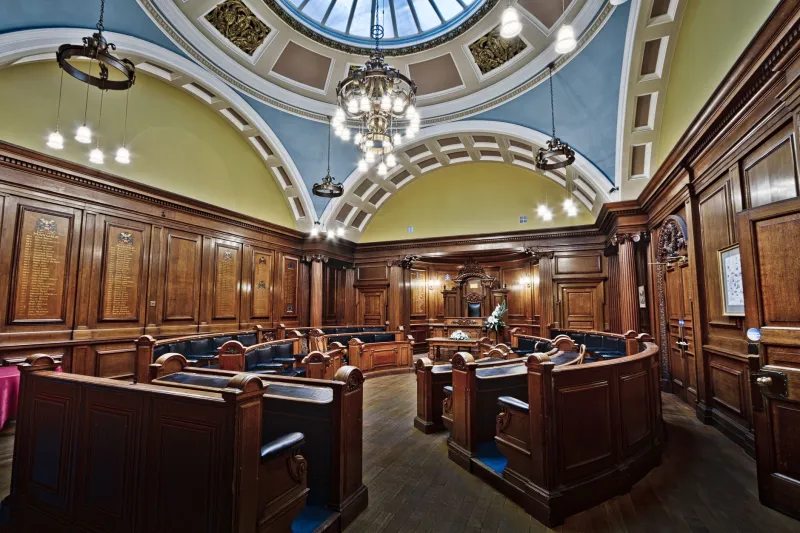
The test is domestic and administrative. Britain's legally binding carbon budgets are not delivered in plenary halls. They are delivered — or quietly eroded — in planning committee rooms above leisure centres, in cabinet reports nobody reads, in licensing decisions taken in Aberdeen, and in the budget lines that decide whether a household in fuel poverty is insulated before the cold sets in. If ministers want the credibility they will claim in Türkiye, they should be able to account for the decisions taken in England's town halls, Scotland's planning authorities and their equivalents in Wales and Northern Ireland. On present evidence, they cannot.
A summit abroad, a verdict at home
Ministerial speeches will lean on diplomatic capital: the Paris Agreement, the Glasgow summit of 2021, a statutory framework that was genuinely world-leading when it was written. All legitimate achievements. But carbon budgets are delivered by policy, not by communiqués. The Climate Change Committee has spent successive annual progress reports finding delivery lagging well behind ambition, and the sixth carbon budget — the legal envelope running to the late 2030s — will be met or missed through decisions taken at a much lower altitude than a COP plenary.
That is why the most revealing question about the UK's climate performance this month is not what the minister says in Antalya. It is what your council approved at its last planning committee, and whether anyone in the room was equipped to assess it.
Planning committees are climate institutions by default
Local Plans set the pattern of a place for fifteen years: where people live, how they travel, whether a new estate can be reached without a car. Outline permissions lock in transport emissions long after the councillors who granted them have left office. Yet many planning committees still decide major applications with no quantified carbon assessment in front of them, relying instead on design statements and officer summaries that mention sustainability in passing.
This is not a technicality. Transport is the largest single source of UK domestic emissions, and the built environment determines transport demand. Every greenfield estate with no bus service, every retail park consented on the edge of town, every road scheme justified by predicted congestion that the scheme itself creates, adds carbon that no national strategy can later subtract. Councils are therefore climate institutions whether they describe themselves that way or not — and most are doing the job without the training, data or staff to do it properly.
Warm homes: a promise in need of a budget line
Domestic heating remains one of the largest sources of UK emissions, and fuel poverty is rising. Ministers routinely describe retrofit as a priority. What matters is the money that actually reaches a council's delivery team, at a scale that allows a street-by-street programme rather than a pilot of forty homes.
Ask your authority how many homes it will retrofit in 2026–27, to what depth of measure, and with what match funding. A depressing number will not be able to answer. Schemes are announced, allocated, underspent and quietly recycled into the following year's press release. A council without a costed, dated, target-bearing retrofit plan does not have a warm homes strategy. It has a web page.
The North Sea contradiction ministers keep avoiding
Licensing is reserved to Westminster, which is precisely why it belongs in this argument. Consenting new oil and gas fields while claiming international climate leadership is a contradiction that no summit declaration resolves. The approval of the Rosebank field in 2023 remains the emblem of it, challenged in court and defended by ministers.
If the government wishes to be taken seriously in Antalya, it should publish, plainly, how a continued programme of new extraction is compatible with the sixth carbon budget. Emissions from burning newly extracted reserves do not disappear because the UK also builds wind farms. Readers are entitled to ask their MP to reconcile the two in writing, and to publish the answer.
Council climate budgets are shrinking in silence
More than three hundred UK councils declared a climate emergency from 2018 onwards. Eight years later, many have a strategy document, a web page and a single officer working on it part-time. Climate and sustainability teams are among the first to be hollowed out when budgets tighten, because their work is long-term and their constituents are, by definition, not yet born.
The 2026–27 local government settlement again asks councils to do more with less. Some will respond by cutting the very function that is supposed to deliver their net zero target. That is a decision, taken by named councillors, in public. It deserves to be reported as one.
Five questions to ask this month
Put these in writing to your council leader, your ward councillors and your MP. Ask for answers in public, not in a private meeting.
- How many major planning applications has the planning committee determined in the past twelve months, and how many were accompanied by a quantified carbon assessment?
- What is the council's capital and revenue spend on domestic retrofit in 2026–27, how many homes will it reach, and what is the shortfall against assessed need?
- Does the emerging Local Plan carry a carbon budget consistent with the sixth carbon budget, and which committee signed it off?
- What is the council's own operational emissions trajectory, and will it publish quarterly figures rather than an annual estimate?
- To your MP: will the government publish the climate compatibility assessment for every new North Sea licence granted in this Parliament, and will it fund a warm homes programme at the scale the Climate Change Committee says is required?
The ledger, not the lectern
A country's climate reputation is settled by whether emissions fall, not by the fluency of a minister's speech. The UK has the architecture — statutory budgets, an independent advisory committee, a planning system that could be used for good. What it lacks is the daily discipline of applying it.
So watch Antalya if you like, and read the communiqué when it lands. Then open your council's committee portal and read what was decided last month in your name. The two documents tell very different stories about British climate leadership — and the one signed off in the town hall is the one that counts.