The Upheld File: Turning Ombudsman Decisions Into a Budget-Day Accountability Dossier
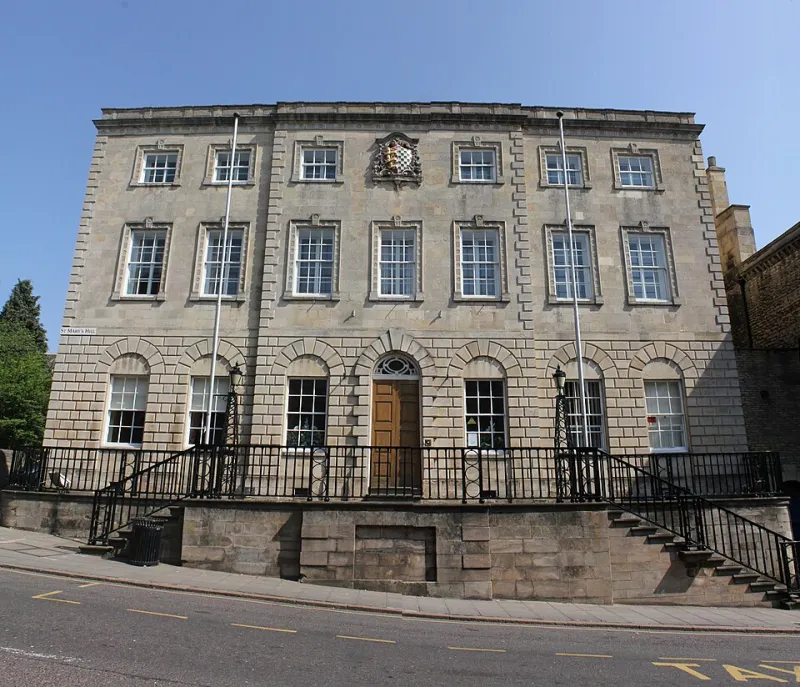
Photo: Jo Turner, CC BY-SA 2.0, via Wikimedia Commons
A public record hiding in plain sight
Council budgets are argued over in public. Complaints about council services are usually settled in private. Between those two worlds sits a record that campaigners ignore at their peril: the decisions of the Local Government and Social Care Ombudsman, or LGSCO.
The Ombudsman investigates complaints about councils in England, including adult social care, children’s services, housing, planning, council tax and benefits. Most decisions are published online. They name the authority, describe the service failure and state whether the complaint was upheld, partly upheld or not upheld. Read one decision and you see an individual injustice. Read twelve months of them for one council and you see a pattern: where the system is failing, who is carrying the cost and whether remedies are being delivered.
This is not a story about isolated mistakes. It is a story about risk. A council with a cluster of upheld housing repairs complaints is not merely unlucky. It may be underinvesting in maintenance, failing to track contractors or ignoring vulnerable residents. A run of upheld special educational needs and disabilities cases may signal a chronic failure to meet statutory assessment deadlines. A pattern of upheld council tax recovery complaints may reveal aggressive collection practices that push households further into debt.
The LGSCO is not a regulator with enforcement powers. It cannot fine a council or order it to change policy. But its decisions are evidence. Used properly, they can force uncomfortable questions into overview and scrutiny, trigger FOI requests that expose the scale of a problem and give campaigners a public argument that is difficult to dismiss as anecdote.
Build the dataset before you build the argument
Start with the LGSCO’s online decisions search. Set the date range to the last twelve complete months. Search for your council by its full legal name, then repeat with common variations and abbreviations. Some decisions may name a service area rather than a department. Capture every result in a spreadsheet.
For each decision, record the date, service area, complaint category, outcome, whether the council was found at fault, whether injustice was identified, the remedy recommended and whether the Ombudsman recorded compliance. Do not rely on memory or headlines. Copy the decision reference. Save a PDF or snapshot of each relevant page, because online records can be updated or reorganised.
Next, separate investigations from early closures. Many complaints are closed after initial enquiries because they are premature, outside jurisdiction or better handled by another route. Those are not upheld or rejected on the merits. For an upheld rate, use the number of decisions where the Ombudsman reached a formal view as the denominator. Count upheld and partly upheld decisions as upheld, but keep them distinct in your notes so your methodology can withstand challenge.
This distinction matters. A campaign that claims a council has an 80 per cent failure rate when most cases were closed before investigation will be dismissed. A campaign that says 62 per cent of formally investigated complaints were upheld, across 47 decisions, with housing repairs accounting for a third of them, is harder to wave away.
Calculate an upheld rate that survives challenge
Publish your method alongside your findings. State the date range, the search terms used, the number of decisions reviewed, the number excluded and why. Show the upheld rate for all investigated decisions, then break it down by service. A single headline rate is useful. A service-level breakdown is more useful still.
Benchmark against neighbouring councils of similar size and type. Do not compare a district with a county unitary as if they deliver the same services. Compare like with like: housing repairs, SEND, council tax recovery, adult social care and planning. Where your council’s upheld rate is higher than similar authorities, ask why. Where it is lower, ask what it is doing right and whether that practice can be shared.
Look beyond the rate. Count the remedies. How often is the council asked to apologise, pay financial redress, review a decision or change a procedure? How often does the Ombudsman report that a remedy was not delivered on time? A council that apologises repeatedly but never changes its systems is not learning. It is managing reputational risk.
Find the pattern, not just the anecdote
Group decisions by service and by failure type. In housing repairs, look for repeat findings about missed appointments, delayed repairs, damp and mould or poor complaint handling. In SEND, look for missed statutory deadlines for education, health and care plans, failures to secure provision or poor communication with families. In council tax recovery, look for failures to consider vulnerability, incorrect billing or recovery action taken while a dispute was unresolved.
Then read the decisions themselves. The Ombudsman’s language is often restrained, but the detail is where the system shows itself. A decision may note that a council had no record of a repair request. Another may find that a family was passed between departments. Another may criticise a council for applying a policy rigidly without considering individual circumstances.
These are not just complaints. They are early warnings. If the same failure appears in five decisions across twelve months, ask how many other residents experienced it but did not complain. That is the question FOI is for.
Put the numbers in front of scrutiny
Overview and scrutiny committees are where council performance is supposed to be examined in public. Use your dossier to request a report. Ask the committee to invite the relevant service director and the council’s complaints lead. Table questions that require data, not reassurance.
Ask: how many complaints did the council receive in each service last year, and how does that compare with LGSCO decisions? What is the council’s internal upheld rate at each stage of its complaints process? How many Ombudsman remedies were due in the last twelve months, and how many were completed on time? What system changes have been made in response to repeat findings? Which decisions have been reported to the relevant cabinet member, and when?
Ask for the council’s complaint performance reports, its customer feedback analysis and any service improvement plans triggered by Ombudsman decisions. If the council cannot produce them, that absence is itself a finding.
Use FOI to move from complaint to system
A single upheld decision proves one failure. FOI can show whether it is systemic. Request the number of complaints received about the same issue over the last two years, the number upheld at each stage, the average time taken to complete repairs or assessments, and the number of cases where statutory deadlines were missed.
For housing repairs, ask for the number of outstanding repair jobs, the average wait and the number of damp and mould complaints. For SEND, ask for the number of education, health and care plans completed within the statutory deadline and the number of tribunals. For council tax recovery, ask for the number of liability orders sought, the number of residents in receipt of council tax support who faced recovery action and the council’s policy on vulnerability.
Keep requests narrow and specific. Ask for aggregate data, not personal information. Publish the responses alongside your original analysis. If a council refuses, ask for the refusal to be reviewed internally and publish that too.
Publish before the budget vote
The next budget vote is not just a vote on council tax. It is a vote on priorities. If your council is proposing cuts to housing repairs, SEND services or council tax support while its Ombudsman record shows repeated failures in those areas, the public deserves to see the two facts side by side.
Publish your dossier in January, before the budget is set. Include a one-page summary, a table of decisions, your methodology and a short list of questions for councillors. Share it with local media, resident groups and opposition councillors. Ask candidates and sitting members to respond in public.
This is not about weaponising individual complaints. It is about using a public record that already exists to demand better. The Ombudsman’s decisions are written for complainants, but they belong to all of us. Read together, they form a ledger of where the council is failing the people it serves. Enough is enough when that ledger is ignored. The job now is to make it impossible to ignore.